
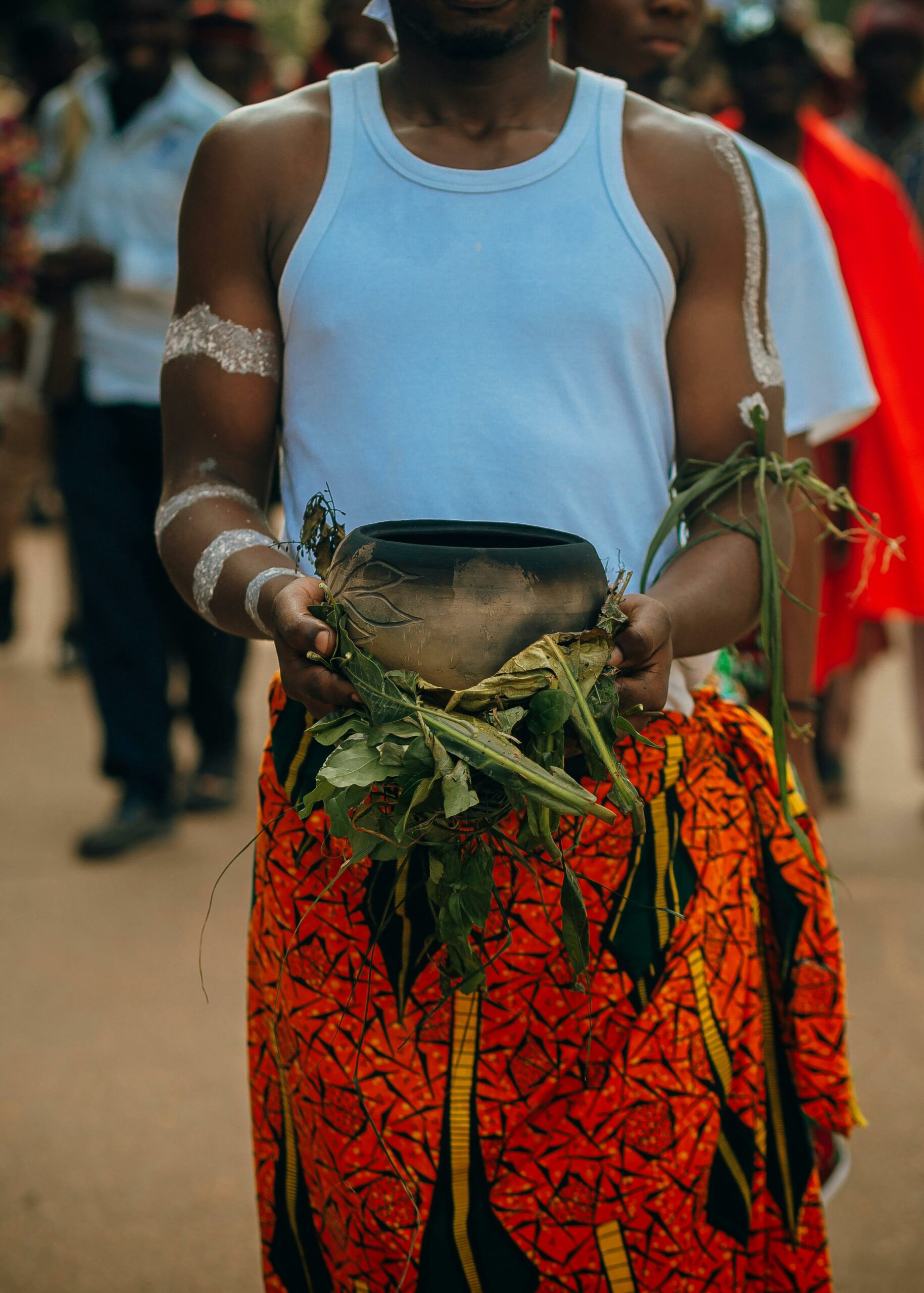

In Rosso and Nouakchott, patients from modest backgrounds move in search of care from healers known for providing relief and healing. By following these therapeutic trajectories, this article seeks to understand how transnational mobility becomes a strategy of survival and care.
Introduction
The migration of African patients remains largely invisible and under-documented, because attention is more focused on the health the migrants who have reached the Canary Islands. (Sirumal, et al., 2025). Yet, along the cross-border space of Rosso and Nouakchott, another migratory dynamic emerges : patients travel in search of health and recovery by “traditional medicine (T.M.)”. (Shewamene, Dune, & Smith, 2017) These therapeutic mobilities mainly concern low- and middle-income groups, including injured drivers, women traders, workers exposed to respiratory diseases… They involve individuals suffering from chronic or poorly treated conditions in their countries of origin (Mauritania, Senegal, and Mali), who temporarily settle in Rosso or Nouakchott, thereby sustaining a transnational therapeutic circuit.
This study, conducted between March and April 2025 through semi-structured interviews, aimed to explore the links between mobility and the search for health in West Africa.
Information to Departure and Therapeutic Stay in Rosso and Nouakchott
These mobilities rely on a discreet but structured transnational organization. First, patients’ visits are coordinated through the healer’s support agents, with initial contacts often established via testimonies from previously healed individuals. Then, when a patient’s condition worsens, the decision to consult a healer is embedded in a family process marked by urgency and limited resources. In most cases, the patient is informed of a healer reputed for treating similar cases, knowledge that circulates through shared narratives and family testimonies. Subsequently, the family organizes a collective contribution based on a flexible system in which each member gives according to their means. Finally, after gathering sufficient resources, they contact the healer’s assistants. These agents manage appointments, transmit prescriptions, reassure newcomers, and ensure continuous follow-up at a distance.
Patient journeys are rarely undertaken alone. They are usually accompanied by women such as mothers, wives, or sisters. This female presence is important. Caregivers provide daily support (washing the patient, changing clothes, preparing food), offer emotional reassurance, and manage the practical organization of the stay, including appointments with healers. The settlement of these patients in Rosso or Nouakchott depends less on the severity of the illness than on the rhythm of consultations prescribed by healers. Certain conditions, such as sexual impotence or spirit possession, require frequent and successive visits, leading to prolonged stays near the healer. In many cases, however, patients stay with relatives. Treatments often rely on spaced consultations. When patients do not live far away, particularly between Senegal and Mauritania, they can return home after a session and come back the following month.
Even when a stay is required, a minimum presence of two days is common. From as early as 5 a.m., queues begin to form in front of the healers’ houses. Bodies settle into a form of constrained patience. Consultations typically begin around 8:30 a.m. Attendance peaks during weekends, when caregivers are less constrained by work. On Fridays, however, healers suspend their activities for the Muslim congregational prayer (Jumu’ah).
Process of Traditional and Spiritual Therapy
Healers in Rosso and Nouakchott are, for the most part, men and women of advanced age, often over fifty. This characteristic is not incidental. Rather, it reflects a demanding conception of therapeutic knowledge, grounded in patience, self-discipline, and a strong moral commitment toward the sick. These forms of knowledge are expressed through practices that, from the patients’ perspective, involve an invisible intervention. In the Escale neighborhood, a man recounts his treatment after a fracture in his right leg: “After examining my leg, the man took a stick and placed it on the fracture for a few seconds. Then he asked me to go back home. But during the night, I felt a deep pain, as if an invisible being was manipulating my leg. In the morning, I could already walk slowly, but I was walking.”
At the same time, healing practices also involve more discreet remedies, based on natural substances and ritualized speech. The treatment of asthma provides a clear example. A five-year-old Malian girl, accompanied by her mother, follows a protocol combining ingestion and incantation. Her mother explains: “Every morning, she takes a spoon of honey mixed with a secret root that the healer gave us. In the afternoon, the healer recites strange words over her chest. After a few days, she started to recover.”. In other cases, the healer’s intervention involves a more direct engagement with the suffering body. In Nouakchott, in the PK7 neighborhood, a woman recounts: “My leg was swollen and filled with pus. The healer examined it, heated a blade and placed it on my leg. I did not feel the fire. He then recited strange words, and I felt the pain rising, as if something was about to come out. Afterwards, he forbade me from bathing with water for a month; I had to clean myself only with olive oil.”
Finally, the issue of payment reveals a particular ethics of care. In most cases, remuneration remains adapted to the patient’s means. As a Gambian worker explains: “Often, it is symbolic. It may seem very small, but it is what they were told to ask for during their spiritual initiation. They are told not to place any burden on the sick.”.
Conclusion:
These health-related mobilities reveal a transnational therapeutic space. In Rosso and Nouakchott, care goes beyond medical treatment, involving relationships, beliefs, and shared expectations. Patients, their female companions, healers, and assistants collectively sustain an accessible system of care adapted to social conditions.
Far from marginal, these mobilities represent another way of seeking health: they reduce treatment costs but require heavy travel expenses and physical effort. Patients move across borders from bus to bus, before returning home with both the burden of the journey and the hope of recovery.
Bibliography
Shewamene, Z., Dune, T., & Smith, C. A. (2017). The use of traditional medicine in maternity care among African women in Africa and the diaspora : a systematic review. BMC complementary and alternative medecine, 17(1).
Sirumal, E., Parpa-Rojas, S., Cassol-Spanemberg, J., Contreras-Madrid, A. I., Pérez-Jorge, D., & Velázquez-Cayón, R. (2025). Descriptive study on oral health and pathologies in vulnerable migrant adolescents from BNorth and Wesr Africa. Scientific Reports, 15(1).
Author: Baye Masse Mbaye
This article has been funded by the “COMPASS” project (1/MAC/4/7.2/0018), approved under the INTERREG VI D MADEIRA-AZORES-CANARIAS territorial cooperation programme, MAC 2021-2027, co-financed at 85% by ERDF funds.
